Whenever I talk with Professor Akira Furusawa, one phrase keeps coming up: “I’m a storyteller myself, after all.”
A quantum physicist, a storyteller?
That was my first reaction.
According to Professor Furusawa, it is because “forming a hypothesis, running experiments, and producing results—that whole process is just like creating a story.”
I had always imagined scientists immersed in equations and experiments, far removed from the world of storytelling. So his words caught me by surprise—in a rather refreshing way.
But the more I thought about it, the more sense it made. We often hear that scientific discoveries and inventions begin with original ideas. Researchers challenge what others take for granted, drawing on their imagination and creativity to form new hypotheses.
Professor Furusawa was an avid reader of fiction through high school, devouring sweeping epics such as Eiji Yoshikawa’s Musashi and The New Tale of the Taira. Yet when he entered university, he stopped reading novels. His explanation is simple: he had “already read enough.” I can’t help wondering, though, whether he had found a new kind of story to immerse himself in: research.
In research, a hypothesis plays much the same role as a plot does in a novel. For a novelist, the plot shapes the direction of the work. How well it comes together can make or break a novel.
When I take on a new theme, I begin by reading background materials and conducting interviews. I check the facts, look for hidden issues, and imagine what the future might hold. Along the way, I gradually shape the plot, always asking myself how to make the story compelling as a work of entertainment.
For a researcher, studying past experimental data and academic papers is much like a novelist gathering background materials. From there, developing an original hypothesis and putting it to the test through experiments is remarkably similar to the way I refine a plot through interviews, trial and error.
Sometimes, an idea strikes me as brilliant at first. But if it turns out to be too far-fetched or simply doesn’t make for an interesting story, I have no hesitation in changing the plot. Occasionally, I throw it out altogether and start from scratch. I imagine research works much the same way. When experiment after experiment fails to produce results, it’s time to reconsider the hypothesis.
And Professor Furusawa is not alone in seeing research this way. Professor Masashi Yanagisawa, a leading authority on sleep science and Director of the International Institute for Integrative Sleep Medicine at the University of Tsukuba, once told me something very similar when I interviewed him: “Running an experiment is just like spinning a story.”
Of course, not every researcher can become a “storyteller.” Originality, realism, and results all have to come together.
A “writer” has to figure out how to cook the ingredients at hand, and that is where differences in individuality and originality emerge.
A novelist seeks to create “a kind of excitement and shock no one has ever read before.” A researcher dreams of making “a discovery no one has ever achieved.”
To achieve this, you must let the results and insights you’ve gathered spark a chemical reaction in your mind, then add a dose of wild imagination.
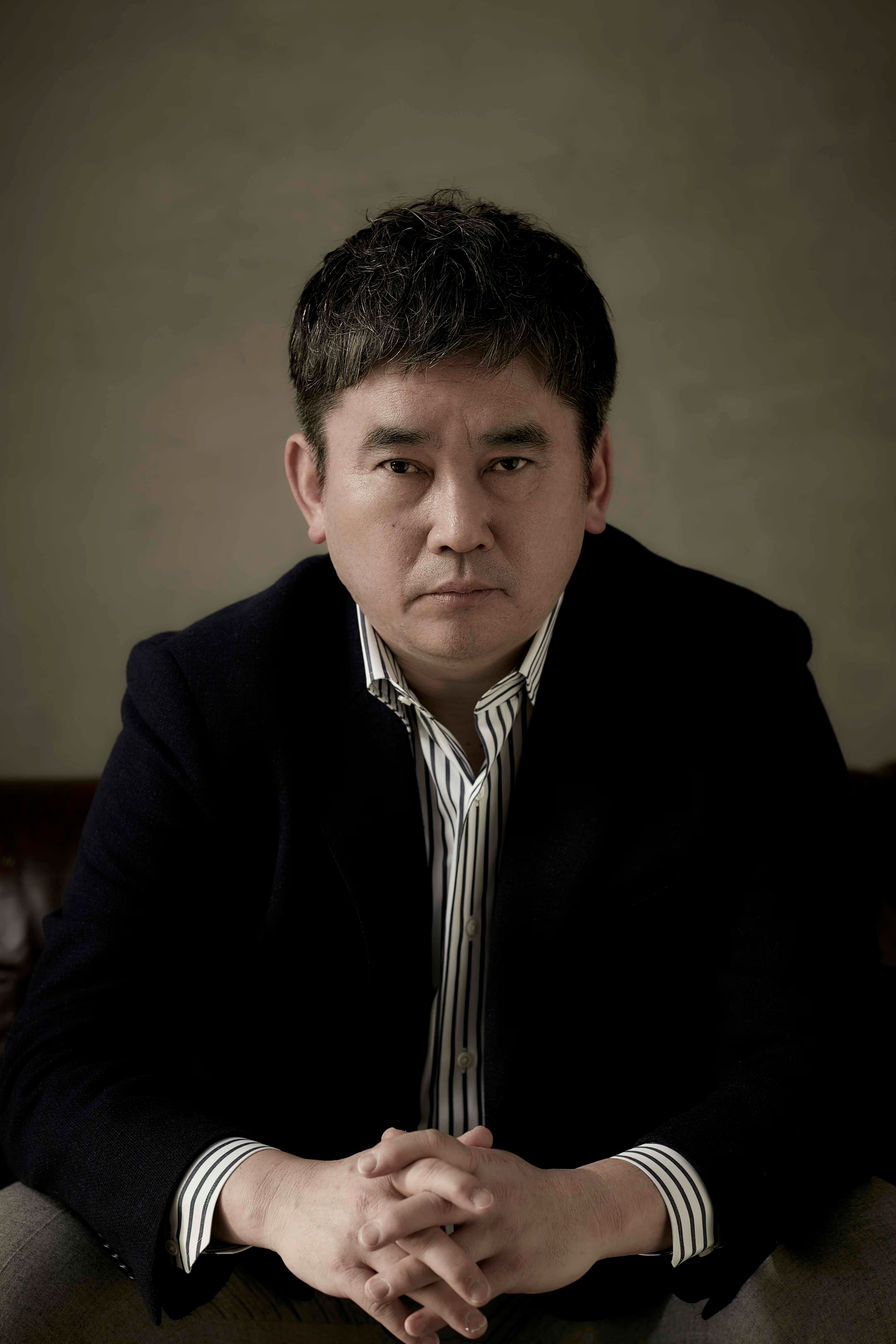
I’ve never asked Professor Furusawa exactly how he goes about his research. But from the impressions he shares after reading my novels, I get the feeling that he recognizes something familiar in the way I think and create.
Perhaps that’s why he says, “Mayama-san and I are very much alike,” and why he calls himself a storyteller, too.
We come from entirely different backgrounds and work in entirely different fields. Yet somewhere beneath those differences, there may be something that makes us kindred spirits.
Whenever I encounter a new theme or challenge, I start thinking about how I can turn it into an engrossing novel.
I imagine Professor Furusawa approaches his own challenges in much the same spirit. With his original ideas, he sets out to unravel problems long thought impossible to solve.
As fellow storytellers, we will continue our relentless pursuit of new challenges.