A Significant Step Toward the Practical Realization of Optical Quantum Computers — OptQC HIQALI Seminar Report
On April 24, 2025, in Shibuya, Tokyo, OptQC Corp. hosted the very first seminar of HIQALI—our industry–academia collaborative membership program.
In this report, we would like to share with companies considering joining HIQALI the atmosphere of the event and the perspectives presented on the potential of optical quantum computing.

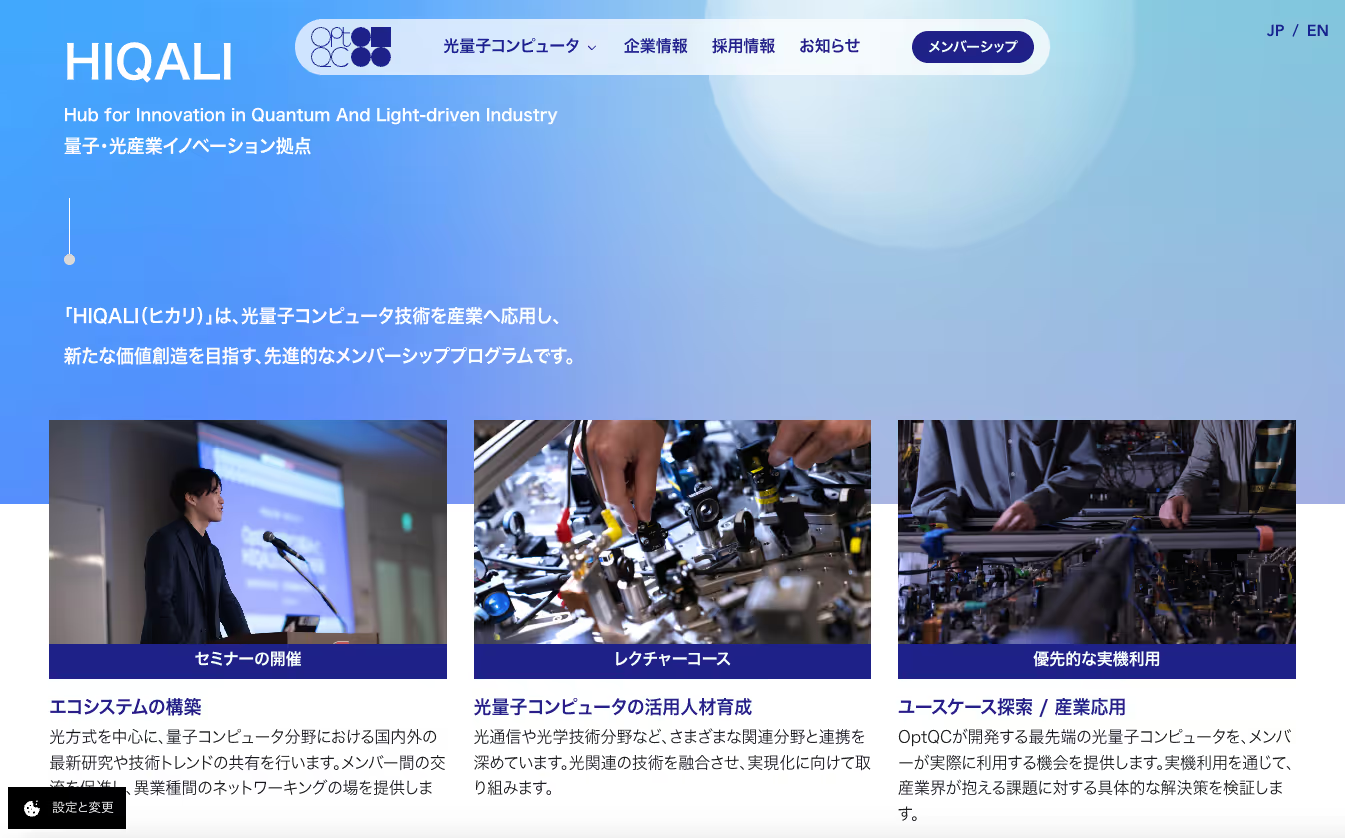
HIQALI is short for Hub for Innovation in Quantum And Light-driven Industry. It is an advanced program designed to apply optical quantum computing technology to real-world industry and to foster new value creation. This closed seminar, held in a hybrid onsite and online format, was attended by technology executives, R&D managers, and new business development leaders from major companies across a wide range of fields.
During the three-hour seminar, it became clear that Japan’s original technology is steadily moving toward practical implementation, that thirty years of accumulated research has created a meaningful global competitive advantage, and that industry, government, and academia have begun working together in earnest. The atmosphere in the venue was not one of loud excitement, but rather a quiet and focused sense of anticipation, as participants carefully assessed the true potential of the technology.
The Potential and Social Value of Optical Quantum Computers
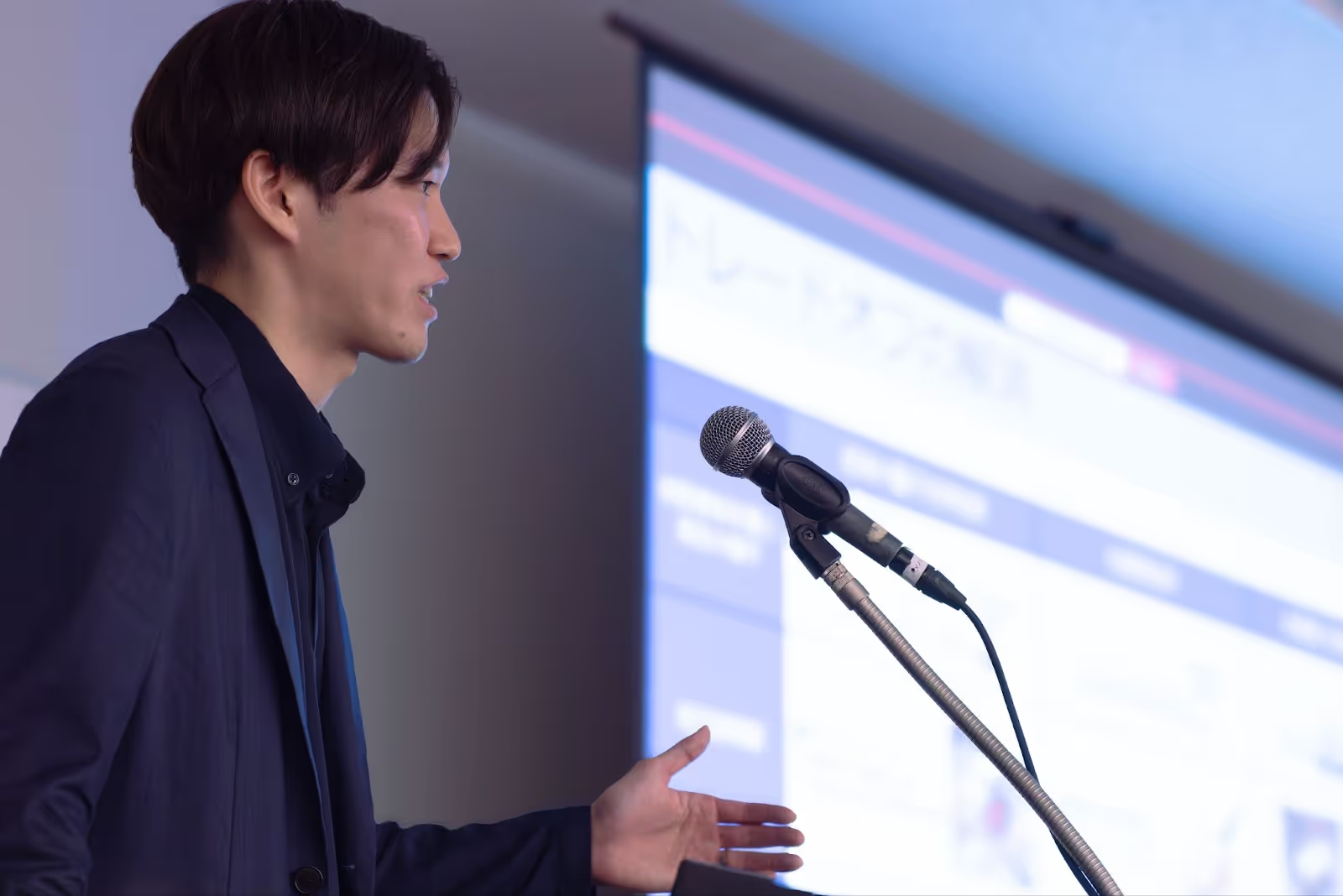
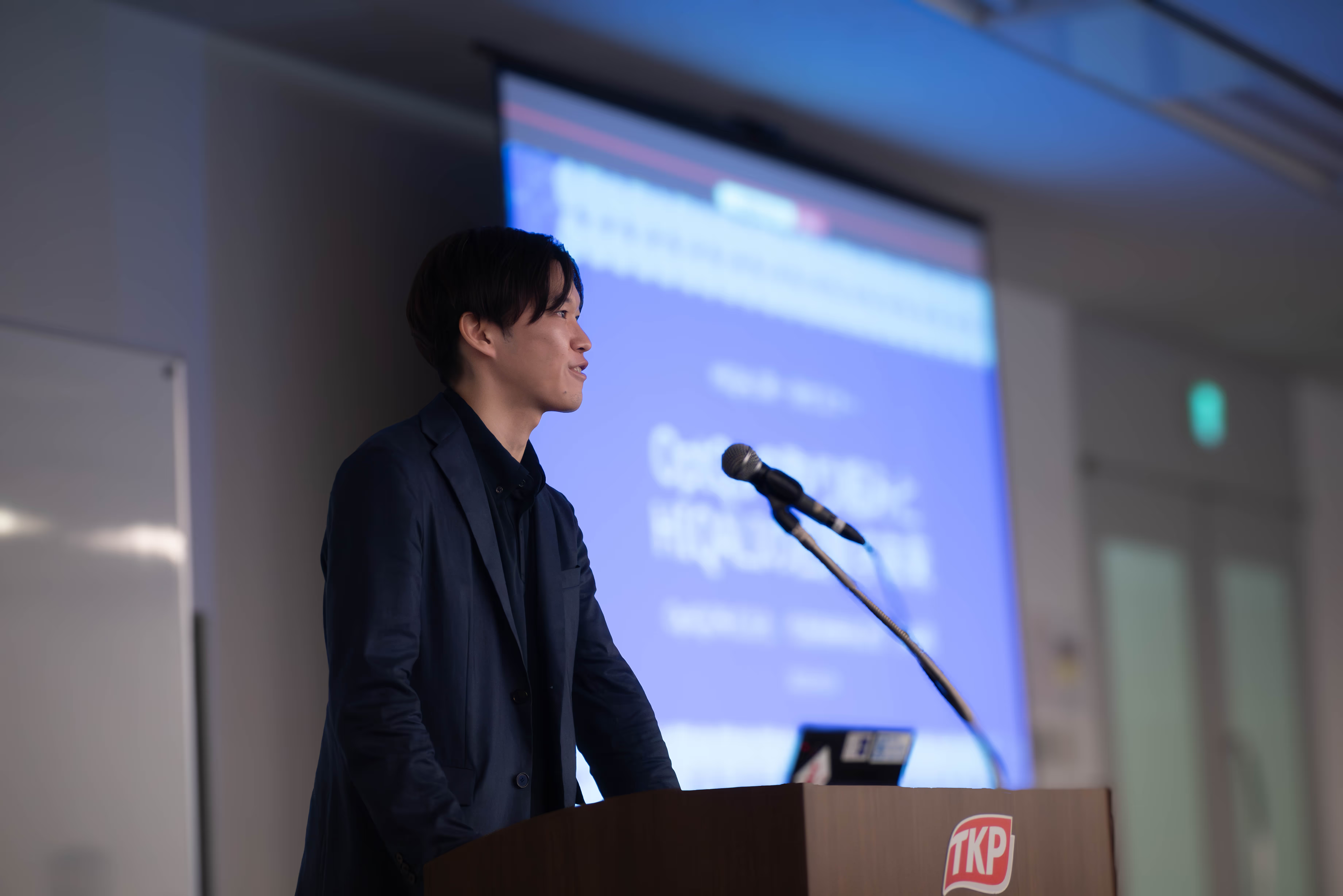
The first speaker to take the stage was OptQC’s CEO, Hiroshi Takase. Introduced by the moderator, he began his talk in a calm and measured tone. Takase spent eight years researching optical quantum computers at the Furusawa Laboratory at the University of Tokyo, later earning his PhD and serving as an assistant professor in the same lab before co-founding OptQC with Professor Furusawa and others in September 2024.
Along with introducing himself, he explained the motivation behind launching HIQALI, showing an image of an actual optical quantum computer on the screen as he spoke.
“There is a clear technological advantage in optical quantum computers. HIQALI is a place where we can work together with industry to give concrete form to that value.”
He then turned to the serious challenges facing today’s information technologies. Supercomputers and data centers continue to boost performance through parallelization. However, if development continues at this pace, there is a possibility that in ten to fifteen years, computing resources could consume all of the energy produced worldwide.
“Just looking at generative AI, you can see how much energy is consumed during training. And in fields such as logistics, materials design, and many others, systems are operating without being able to achieve complete optimization.”
Takase explained the value quantum computers can provide from the perspective of resource optimization. By optimizing limited resources—time, labor, funding—we can build a better society. But it is meaningless for the vendor alone to claim the value of the technology. It is necessary to understand what value users themselves perceive.
He explained that this was a major motivation behind the creation of HIQALI.
HIQALI’s three core activities and the benefits for members
HIQALI’s activities are built around three pillars.
The first is information sharing and ecosystem building. Seminars like this one fall into that category, enabling the sharing of the latest research results and technology trends, while helping to foster networking among participating companies.
The second is talent development. Through lecture courses, participants can systematically learn optical quantum computing and develop the ability to program in this field. Takase openly acknowledged that “the optical quantum computing field has a much smaller population compared to the qubit-based field,” which is precisely why a structured educational environment is essential.
The third is the exploration of use cases and industrial applications. Practical access to actual machines is scheduled to begin in fiscal year 2026, and this year is positioned as a preparation period toward that goal.
“We want to make this a place where you can access a uniquely Japanese machine earlier than anyone else in the world.”
Revolutionary scalability enabled by time-domain multiplexing
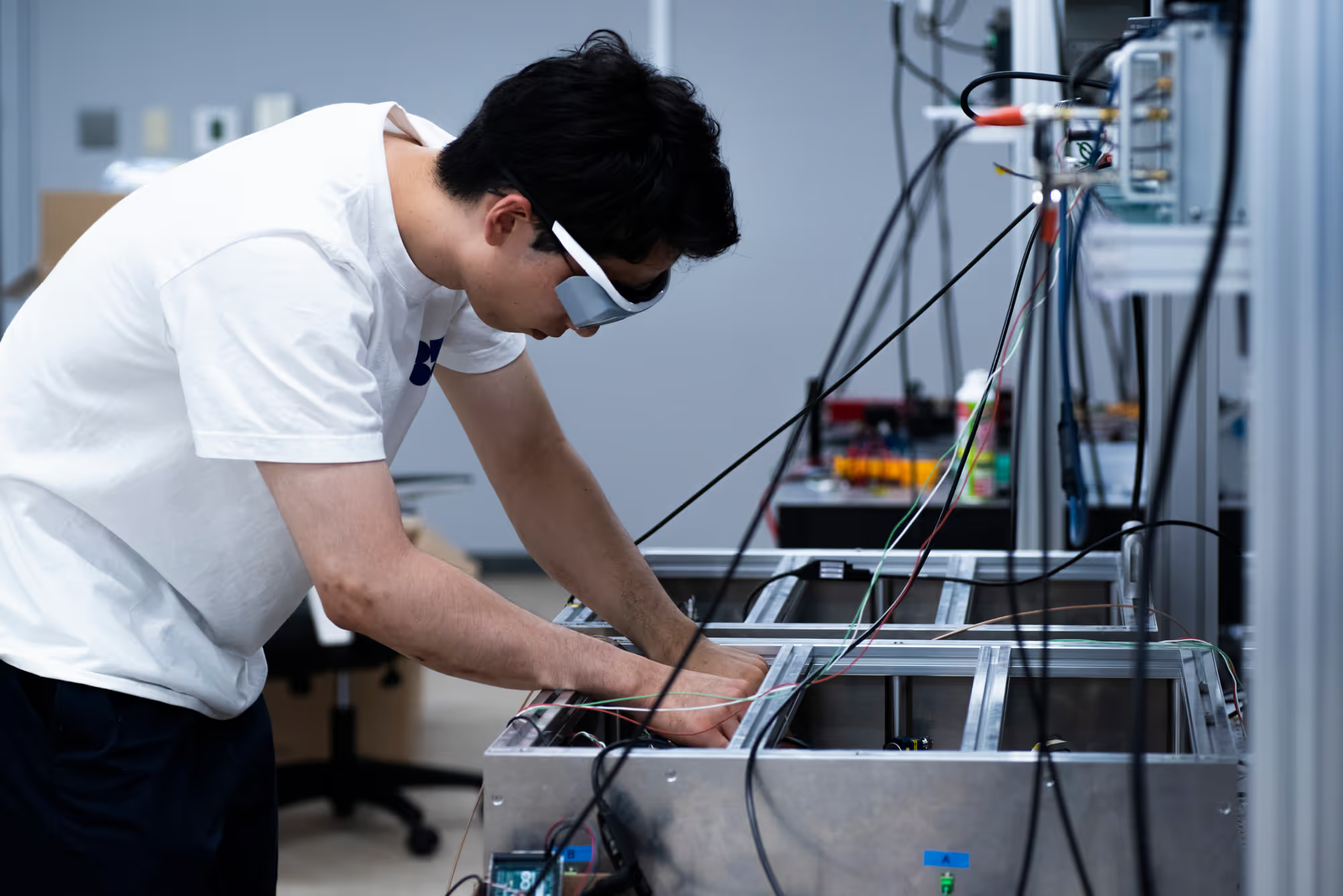
Moving into the technical explanation, Takase carefully chose his words as he described the features of OptQC’s optical quantum computer.
He explained what is known as a measurement-induced quantum computer based on time-domain multiplexing using continuous-variable quantum modes from optical pulses—a complex concept he illustrated with diagrams to make it easier to understand.
What deserves particular attention is the technical approach of time-domain multiplexing. Traditional quantum computers require physically scaling up the device in order to increase the number of qubits.
OptQC’s approach is different.
“The size of the hardware does not grow with the number of qubits. Even as computational power increases, the hardware size—and the cost—do not depend on the qubit count.”
Takase also presented the outlook for the machine currently capable of processing around one hundred quantum modes, explaining that it is expected to evolve into a next-generation system by 2028. He mentioned that this next-generation machine is projected to achieve more than one hundred times the current processing capacity, thanks to a series of technical breakthroughs. Because this was a closed community, he was able to speak freely and in detail about the innovative approaches that will make such advancements possible.
Toward the end of his talk, Takase once again emphasized the significance of HIQALI. “I hope this will be an opportunity to think about how this machine might connect with the work being done in your respective companies. Some of you are device manufacturers, others are software developers. There are many different ways to engage with optical quantum computing.”
The 30 Years of Research Accumulated by Professor Furusawa and the Fundamental Advantages of the Optical Approach
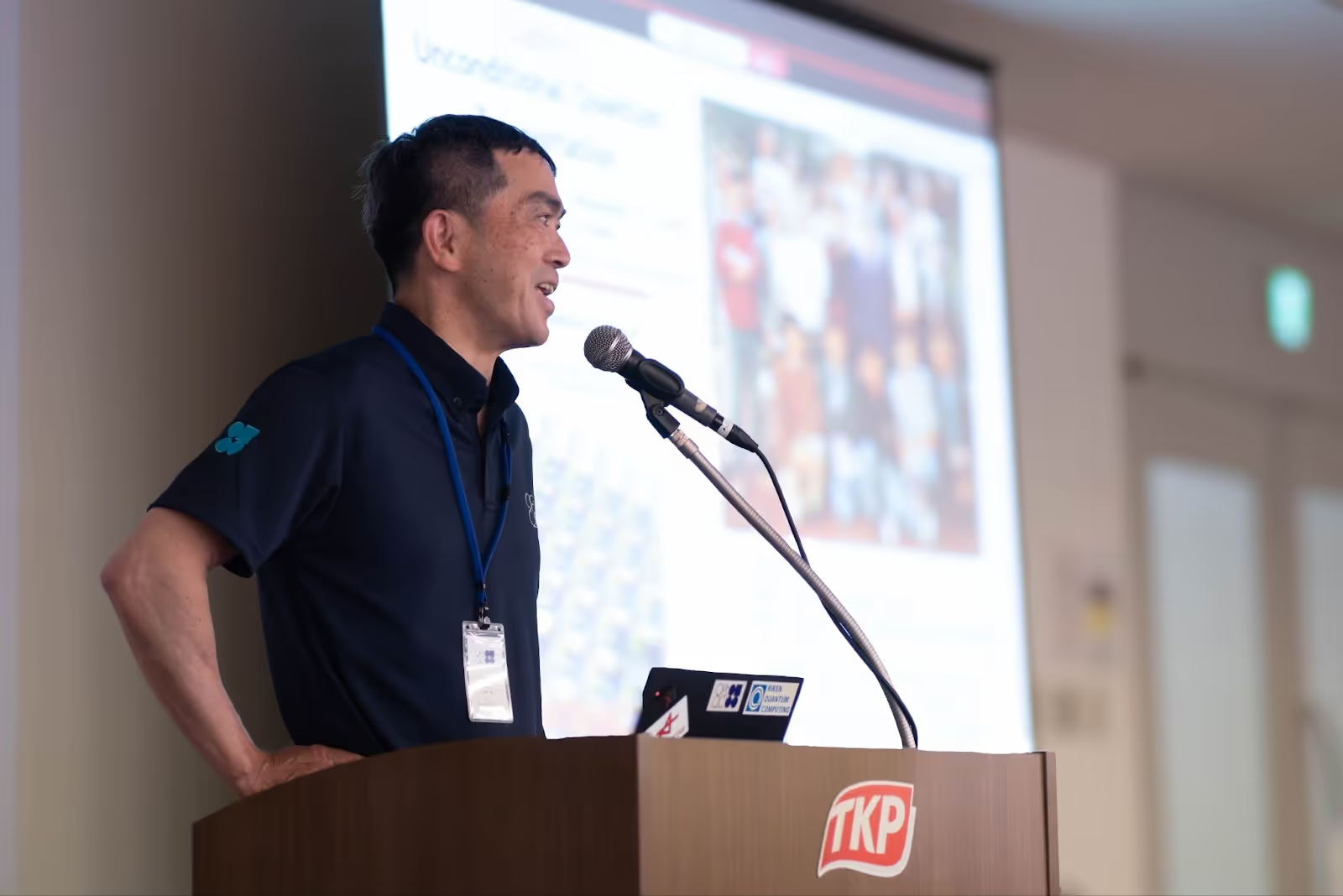
After a ten-minute break, Professor Akira Furusawa of the Graduate School of Engineering at the University of Tokyo took the stage. He is also the Deputy Director of the RIKEN Quantum Computing Center and a board member of OptQC, and is regarded as one of the world’s leading authorities in optical quantum computing.
“In the introduction, only my University of Tokyo role was mentioned, but I actually hold three positions. At UTokyo, I conduct fundamental research. At RIKEN, I build quantum computers—and I have succeeded in doing so. And finally, at OptQC, the goal is to turn this into a business.”
Professor Furusawa began his lecture by reflecting on his career.
“I’ve been working on quantum computers for thirty years now, and I’m probably one of the oldest in the field worldwide.”
The Dawn of Quantum Computing — The QUIC Project
Professor Furusawa was an original member of QUIC, a quantum computing research project launched by the U.S. Defense Advanced Research Projects Agency (DARPA) in 1996. Showing photos from that time, he spoke about the early days of quantum computing research.
“In the QUIC project, we studied two things. One was hardware—research related to actually building a quantum computer. The other was software, or rather the basic theoretical systems involved.”
He explained that the project included remarkable figures, including researchers who would later win the Nobel Prize in Physics and the founders of quantum error-correction theory. He also recounted his own achievement in 1998, when he successfully carried out the world’s first deterministic quantum teleportation, which was selected as one of Science magazine’s Top 10 Breakthroughs.
From Digital to Analog — A Fundamental Solution to the Energy Problem

One of the most striking moments in Professor Furusawa’s talk was his explanation of the fundamental issues faced by current computing technologies.
“What I want to emphasize today is that our quantum computer is extremely rational.”
He discussed the inefficiencies of digital computation from his unique perspective, exploring why modern AI consumes enormous amounts of energy and identifying the root causes. He then explained, with concrete examples, just how efficient analog computation can be.
This explanation succinctly captured the direction that optical quantum computing aims to pursue.
Integration with Optical Communication Technology and Applications to AI
Professor Furusawa also described the performance indicators of the optical quantum computer developed at RIKEN.
“We follow the principles of optical communication. Optical communication channels are analog.”
He highlighted that integrating optical communication technologies allows the use of existing industrial infrastructure. He also spoke passionately about the potential application of optical quantum computing to neural networks, an approach that could address the energy challenges faced by today’s AI systems.
Toward the end of his lecture, he emphasized the strong compatibility between optical quantum computers and AI, presenting the possibility of highly energy-efficient AI processing.
Concrete Pathways Toward Industrialization Highlighted in the Panel Discussion
After a short break, the final session of the seminar—a panel discussion—began. The moderator was Takuji Hiraoka of Fixstars Amplify, who guided the conversation from the perspective of a company with a strong track record in quantum computing software development.
Five leading experts from industry, government, and academia joined as panelists. Even from their self-introductions, the depth of Japan’s quantum computing ecosystem was immediately apparent.
Examples of Industry–Academia Collaboration and the Keys to Success
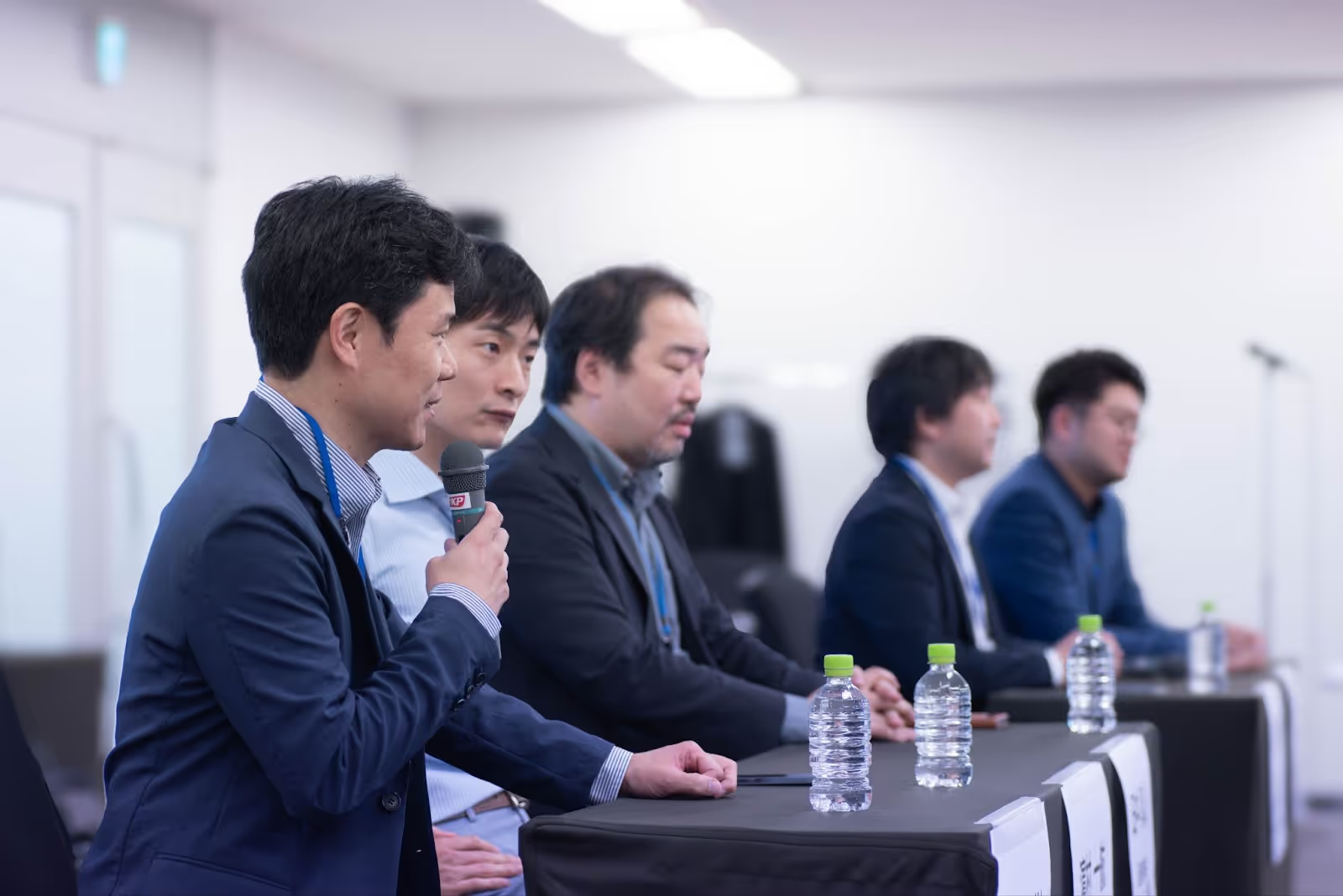
Professor Naoki Yamamoto of Keio University introduced the initiatives underway at the university’s Quantum Computing Center.
“We established a center on campus, where researchers from a wide range of companies—including major automakers, financial institutions, and materials and chemical manufacturers—work on-site with us and engage in ongoing discussions.”
According to Professor Yamamoto, meaningful synergies are emerging as researchers from diverse backgrounds gather around the shared keyword of quantum computing.
“We realized that real, not virtual, collaboration was necessary. We have continued this for six years, and we are now seeing clear results.”
Government Support Demonstrating Serious Commitment

Masato Tanaka of the Ministry of Economy, Trade and Industry spoke about the importance of the Quantum Industry Office, newly established in April of this year.
“It reflects METI’s commitment to ensuring that the industrialization of quantum and other advanced technologies keeps pace with the rest of the world.”
Tanaka also explained specific support measures. At AIST, a facility known as G-QuAT has been developed, providing computing resources, prototyping environments, and evaluation infrastructure. It is structured in a way that allows for business use as well.
“For many companies, the challenge is that they still can’t clearly see what can be done. NEDO created a collection of use cases, and this year we also launched a prize-based program. We’ve received many unexpected proposals—ranging from anime and tourism to life planning.”
His message made it clear that the government is working to lower the initial hurdles for companies exploring quantum technologies.
The Potential of Optical Quantum Computers from an Investor’s Perspective
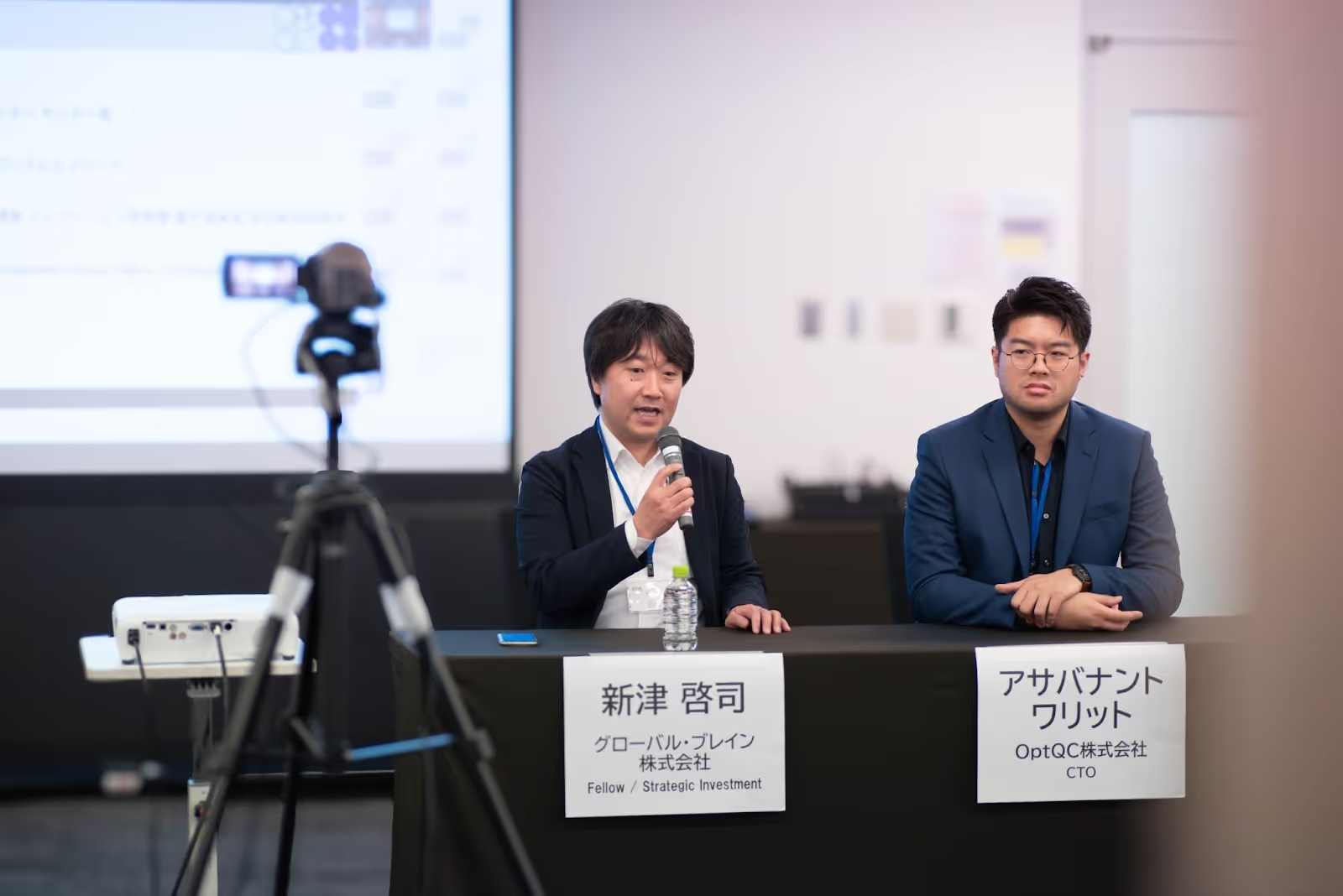
Keiji Niitsu of Global Brain offered an evaluation of optical quantum computing from the viewpoint of an investor.
“Optical quantum computers can perform continuous-variable computation, which sets them apart from gate-based systems. It’s important to communicate to industry where these systems can be applied.”
Niitsu also introduced examples of growth among overseas quantum startups. IonQ grew from USD 2 million in revenue at the time of its IPO to USD 43 million in 2024. PsiQuantum raised USD 750 million in March 2025, reaching a valuation of USD 6.8 billion. He added that when Google announced its progress in error correction, the stock price of Rigetti rose significantly—illustrating just how much technological breakthroughs can influence the market.
A Roadmap for Implementing the Technology in Society
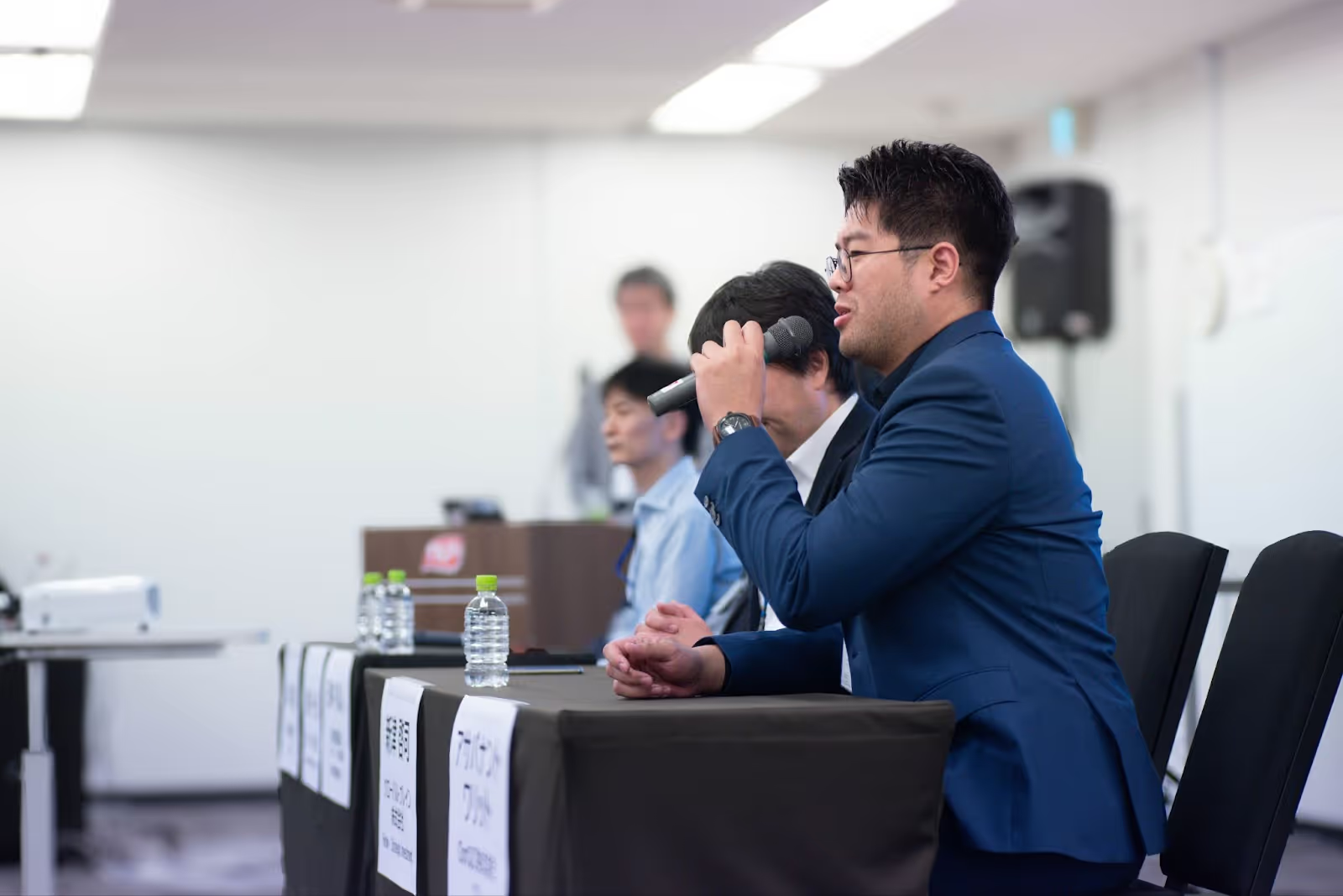
OptQC’s CTO, Dr. Warit Asavanant, explained the technological roadmap for optical quantum computing.
“Our current machine can perform only continuous-variable linear operations, but we will begin incorporating nonlinearity going forward. The machine being developed at AIST over the next two or three years will have slightly more than one hundred inputs. And in about five years, we expect machines capable of handling ten thousand or even one hundred thousand inputs.”
Warit also spoke candidly about the challenges of promoting the technology.
“Continuous variables are unfamiliar territory, so helping users understand

The Importance of a Long-Term Perspective
One particularly memorable part of the discussion was Professor Yamamoto’s expression “winning by perseverance.”
“Before I started working in quantum computing, I worked on continuous-variable quantum computing, the optical approach. The boom in neural networks took fifty years. It started in the 1970s, and only now has money begun to flow. It feels like perseverance paid off.”
He continued, “For quantum as well, whether we are willing to wait twenty years may be a major factor,” emphasizing the importance of long-term vision in technological development.
The tension between short-term results and long-term investment—and the need to navigate that tension—made “winning by perseverance” a striking and meaningful phrase.
Questions from the Audience and an Active Exchange

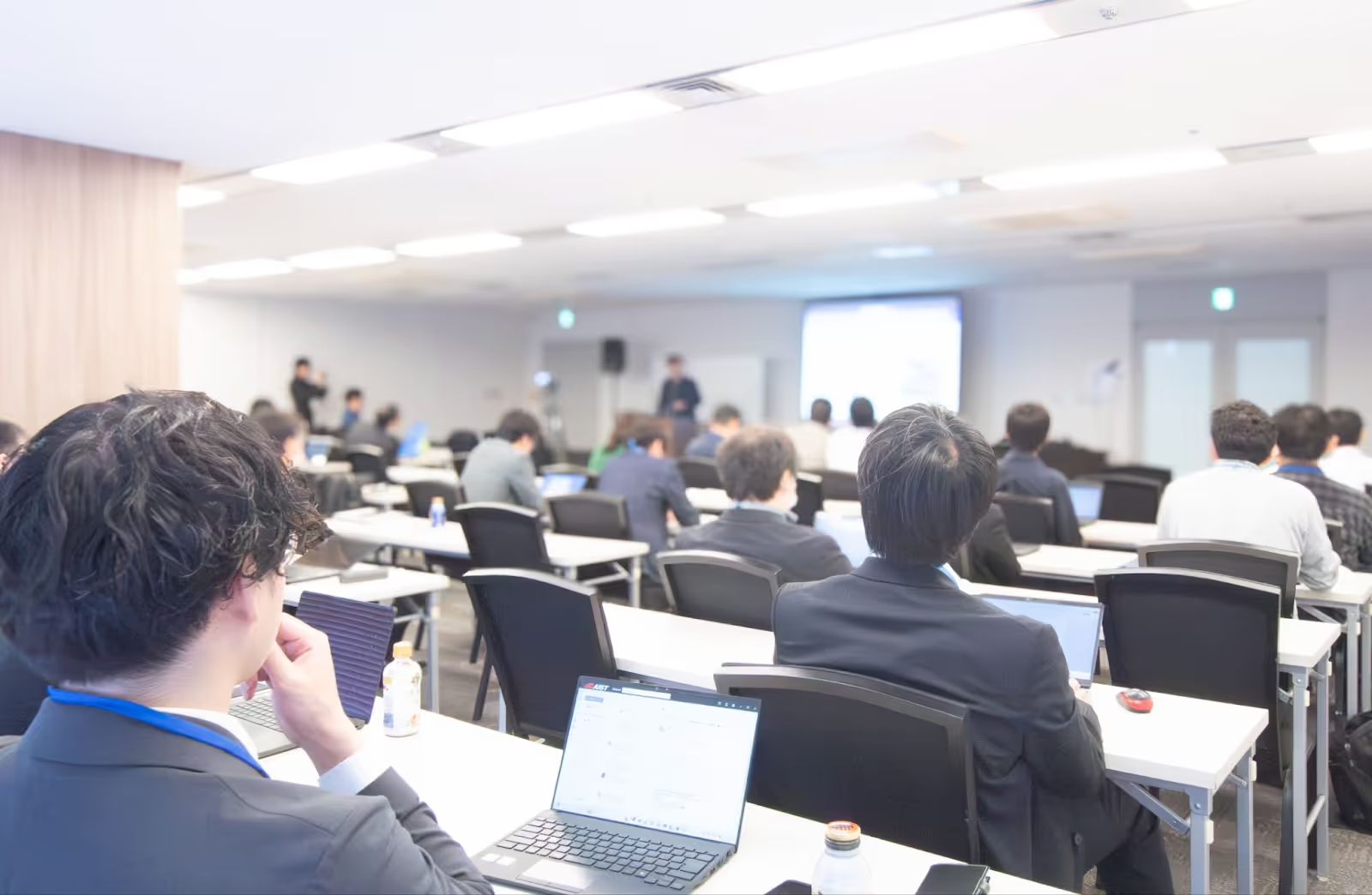
During the panel discussion, several questions were raised from the audience. Topics included licensing strategies, approaches to library development, and practical challenges in implementation. The panelists responded candidly from their respective standpoints, and some comments went surprisingly deep—remarks one might wonder if they were even allowed to be shared. It was precisely because this was a closed community that such honest, unfiltered discussion was possible.
The Value HIQALI Provides and What We Expect from Participating Companies

In closing the panel discussion, moderator Hiraoka offered the following remark:
“Some of Warit’s comments today were right on the edge of what he could or couldn’t say. I imagine that members of this program will continue to hear that kind of privileged information going forward.”
This idea of “pushing the limits” captures the essence of HIQALI. In this closed environment, participants gain access to information from the very forefront of technological development—details that would never be shared in a public seminar.
The Three Values HIQALI Offers
First, members gain early access to world-leading research results. Professor Furusawa’s technological foundation, built over thirty years, and OptQC’s latest progress toward practical implementation are available here sooner than anywhere else.
Second, HIQALI offers a structured talent development program. Beginning in July, the lecture course will allow participants to learn continuous-variable quantum computation systematically, from fundamentals to implementation. All instructors hold PhDs and provide practical training grounded in deep knowledge of the hardware.
Third, from fiscal year 2026 onward, members will receive priority access to the actual machine. This provides an opportunity to be among the first in the world to apply an optical quantum computer to real business use.
The Value Reflected in Participants’ Voices
After the seminar, participants shared a variety of impressions.
“I honestly didn’t expect to hear such concrete details.”
“I always thought quantum computing seemed too difficult, but now I can see its potential for business.”
“The phrase ‘winning by perseverance’ from the panel discussion was memorable. It reminded me of the importance of taking a long-term view when making technological investments.”
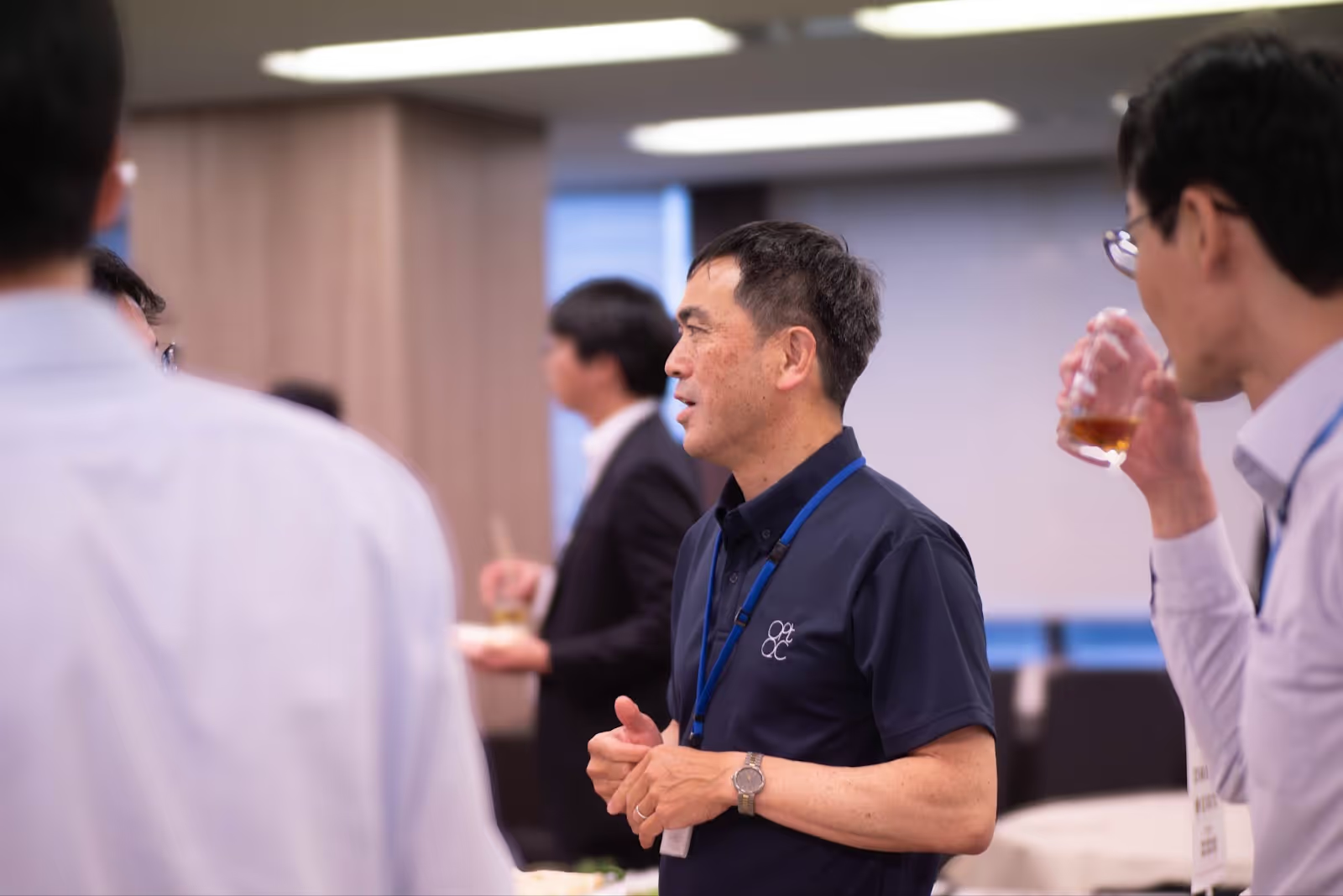
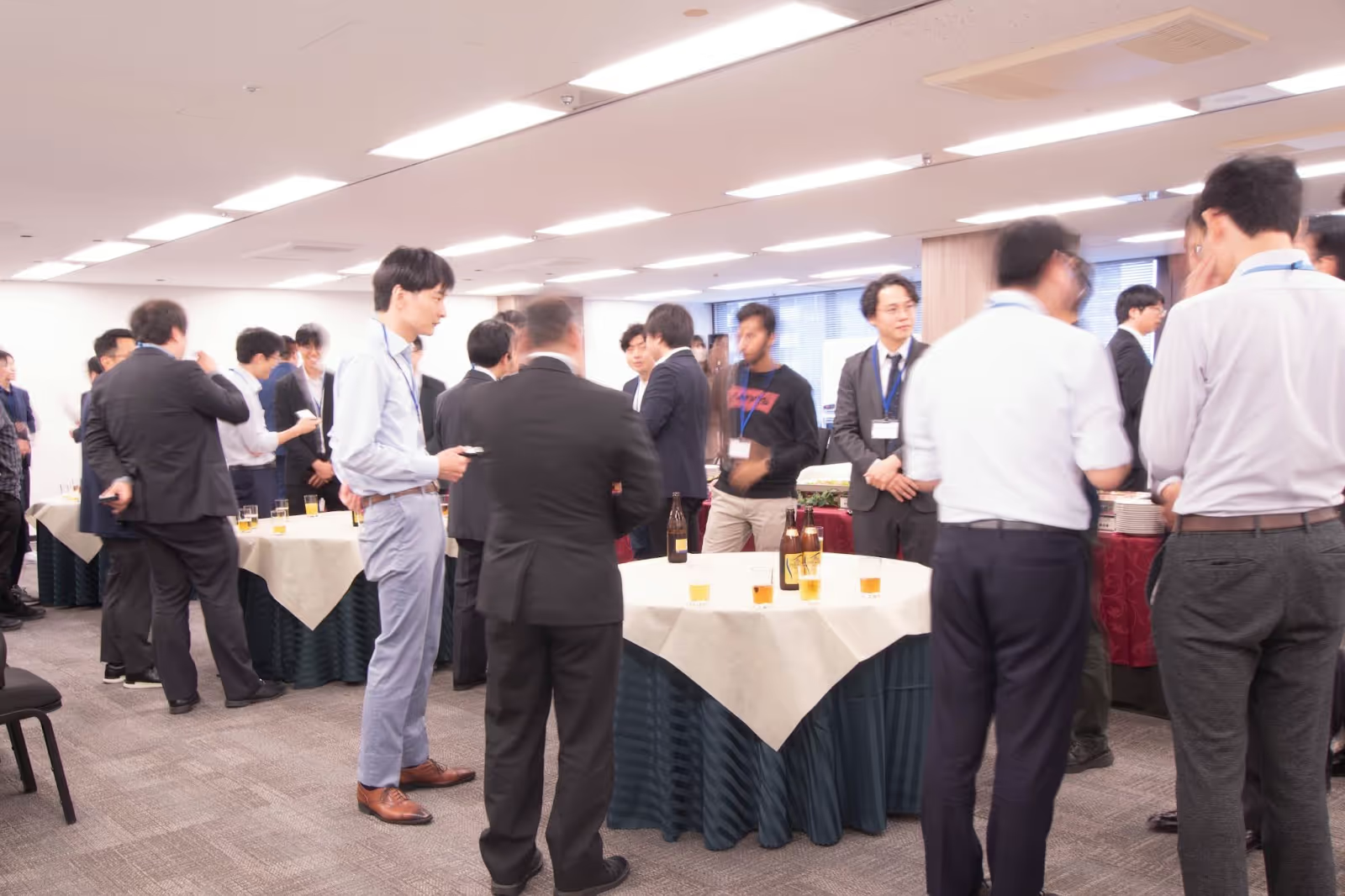
Following the seminar, many attendees joined the networking session, where conversations continued in a relaxed and friendly atmosphere.
The Day When Japanese Technology Becomes a Global Standard
Throughout the seminar, what stood out was the quiet yet unmistakable enthusiasm shared by everyone in the room. There were no flashy presentations or exaggerated hype. Instead, the event offered firm technical grounding and realistic visions of the future, giving participants confidence in the potential of optical quantum computers.
In the six months since its founding last September, OptQC has already achieved numerous milestones: selection for the UTokyo IPC acceleration program, selection for the Cabinet Office’s BRIDGE program, AISol startup certification, and recognition at EY Entrepreneur Of The Year. Each achievement serves as evidence of the technology’s soundness and the promise of the business.
Optical quantum computing is still unfamiliar to many. Yet on this day in Shibuya, pioneers in the field shared their conviction in its potential and outlined the path toward practical realization. When it comes to addressing modern challenges—energy efficiency, optimization, AI processing—Japanese technology is poised to offer groundbreaking solutions. The opportunity to stand at the forefront of this shift is here now.
To inquire about joining HIQALI, please contact hiqali@optqc.com .
The third seminar—focused on “The Cutting Edge of Quantum Technology”—is scheduled for October. Membership includes access to recordings of past seminars.
History has always been shaped by those with foresight. The time has come to take the first step toward a new frontier in optical quantum computing. Will you join us in creating that history together?
Note: Company performance figures and related data mentioned in this article are based on statements made at the time of the seminar and may differ from the most recent information.